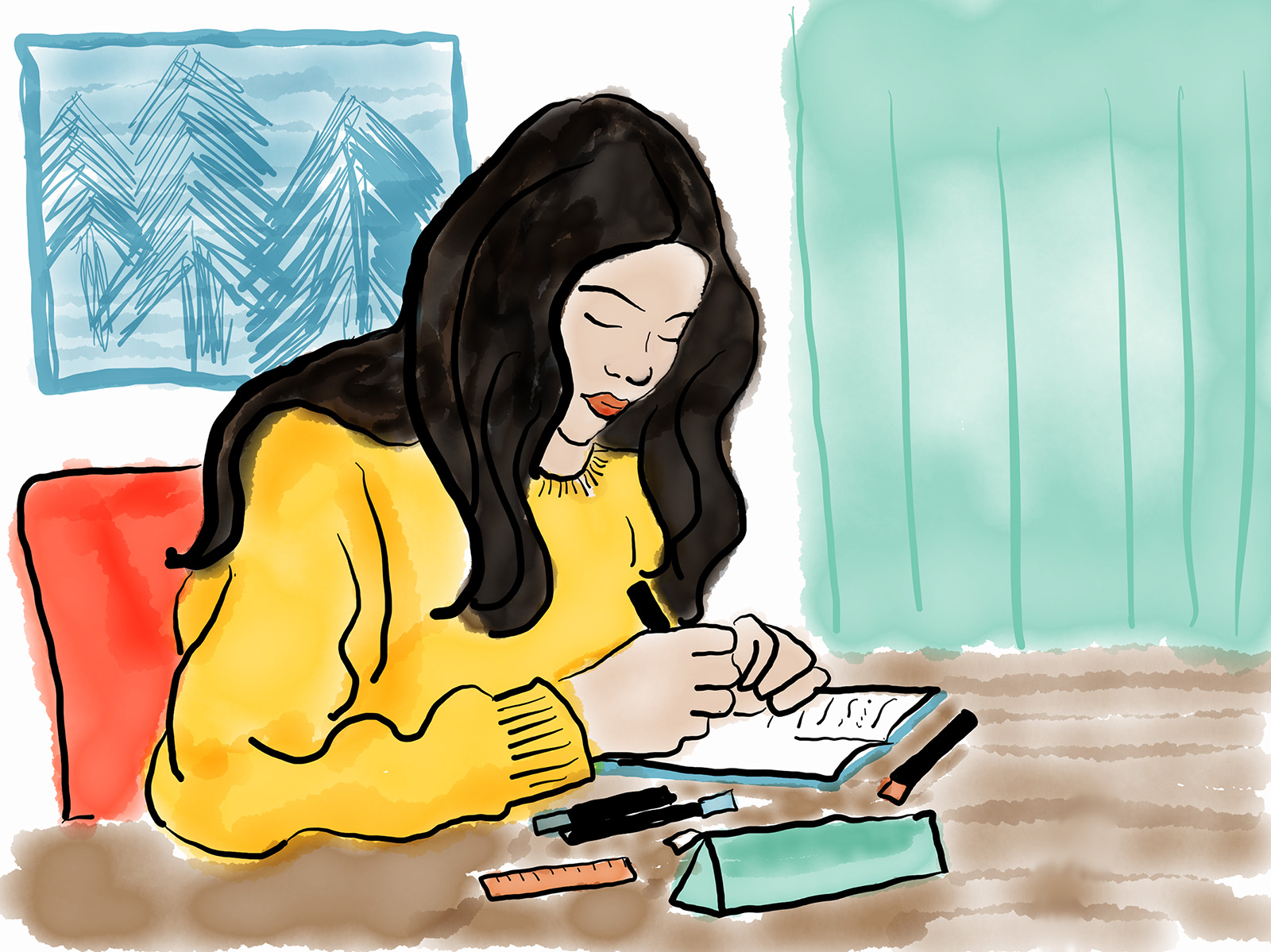
The phone comes out before we have decided to use it.
We reach for it while waiting for coffee, sitting in a lobby, arriving a few minutes early, or standing in line. It has become the place where every unoccupied moment goes.
Recently, more people have started carrying an alternative.
They are filling bags with notebooks, paperbacks, puzzle books, cameras, pens, and other physical activities they can reach for instead of automatically scrolling. Some call it an analog bag.
But the bag is not the most interesting part.
What matters is the decision behind it: to give our attention somewhere else to land.
We need more willpower?
When we find ourselves reaching for our phones again, it is easy to see the problem as a personal failure.
We should have more discipline. Turn off more notifications. Set better boundaries. Stop being so easily distracted.
But what if a lack of willpower is not the real problem?
In Stolen Focus, Johann Hari argues that our declining ability to concentrate is not simply an individual weakness. Our attention is being affected by powerful forces around us—from technologies designed to keep us engaged to increasing stress, exhaustion, interruption, and information overload. Personal habits matter, but we cannot solve a systemic attention problem by blaming ourselves for failing to resist it.
In other words, it is not entirely our fault.
Our phones offer stimulation the instant discomfort, boredom, or empty space appears. The platforms we use are very good at keeping us looking, clicking, and returning.
We are asking individual willpower to compete with an environment built to capture our attention.
That does not mean we are powerless. It means we may need more than another screen-time limit or promise to do better tomorrow.
We need alternatives.
It is much harder to stop reaching for a phone when the phone is the only interesting thing within reach. Carrying an analog tool changes the environment around the habit.
- A notebook gives your hands something to do.
- A book gives your mind somewhere to go.
- A camera gives you a reason to look more closely.
- A puzzle offers a problem with an ending.
These tools do not require heroic self-control. They simply give us another choice when our attention is looking for somewhere to land.
Analog tools give us another choice
Phones are very good at eliminating empty space.
Open an app, and something is already waiting. A video begins. A headline appears. A notification asks for a response. An algorithm suggests what should come next.
You do not have to decide what interests you. The decision has already been made.
An analog tool works differently.
A blank page does not know what you should think about. A pencil cannot recommend the next drawing. A book will not interrupt its own chapter because another paragraph may be more engaging.
These tools wait for you to participate.
That can feel extremely uncomfortable (at first).
Without a stream of ready-made stimulation, you may notice boredom, restlessness, or the strange impulse to check whether anything has happened in the past three minutes.
But if you stay with the moment, something else begins to happen.
You start noticing.
Analog tools create a pause…and ask something of us
There is a small amount of effort involved in using a physical tool.
You have to take the notebook out. Open it. Find the next blank page. Uncap the pen. Decide what to put down.
That tiny sequence creates a pause between impulse and action. The pause matters.
It gives you a chance to choose where your attention goes instead of following a habit without thinking.
Digital media is often built around consumption.
We watch, read, swipe, react, and move on.
Analog tools tend to ask for more participation.
- A notebook asks you to make a mark.
- A camera asks you to frame what you see.
- A book asks you to stay with another person’s thinking.
- A deck of cards asks you to interact with someone nearby.
- Even doodling asks you to decide what line comes next.
That participation changes the quality of the moment. You are no longer only receiving information. You are responding to the world around you.
You are making something, even if the something is only a small record of what caught your attention.
Analog tools leave evidence
Think about the last ten minutes you spent scrolling.
You may remember one image, one headline, or the vague feeling that everyone else is living a more organized and photogenic life.
But often, the time disappears without leaving much behind.
Ten minutes with a notebook can leave you with a page.
It might contain a rough sketch, a sentence, a question, a list, a memory, or a messy collection of all five.
The page becomes evidence that you were present.
It also becomes something you can return to.
A thought that seemed small may connect with another thought later. A quick drawing may help you remember an entire afternoon. A phrase you overheard may become the beginning of a story, project, or new direction.
Your pages do not have to be polished to be valuable.
They only need to hold something you might otherwise have lost.
Analog tools have boundaries
One of the quiet gifts of an analog tool is that it has limits.
- A page has edges.
- A chapter ends.
- A roll of film runs out.
- A puzzle can be completed.
These boundaries create a sense of satisfaction that is difficult to find in an endless feed.
There is no natural stopping point when the next post is always waiting. But you can finish a journal entry. You can close a book. You can put down a pencil and feel that, for now, you are done.
The tool does not demand that you remain engaged.
It lets you leave.
Why a visual journal belongs in your analog bag
A visual journal may be one of the most flexible analog tools you can carry.
It can be a place to write, draw, plan, reflect, collect, remember, or work something out. You do not have to decide in advance what kind of journal it will be.
It can become whatever the moment needs.
You can use it to capture:
- Something you noticed
- A quick sketch of where you are
- A phrase you overheard
- A question you want to explore
- A map of your thoughts
- A small memory from the day
- A list of what is taking up space in your mind
- A color, shape, or pattern you want to remember
You do not need artistic ability.
You do not need special supplies.
You do not need to create pages that look finished, balanced, or ready to share.
A visual journal is not a performance.
It is a place to pay attention.
Create an attention kit
You do not need to buy a new bag or fill it with charming supplies. (Though you definitely can if you want to!)
Choose three simple things.
Something for capturing
Carry a small notebook and a pen or pencil.
Pick a notebook that is easy to bring with you. The best notebook is not necessarily the one with the most beautiful paper. It is the one you will actually use.
Something for enjoying
Add a paperback, puzzle book, deck of cards, or another activity you genuinely like.
Do not choose something because it seems like the kind of activity an interesting person should carry. Choose something you will reach for.
Something for noticing
This could be a camera, a small set of colored pencils, a viewfinder, or simply a prompt written on an index card.
Try prompts such as:
What do I see that I did not notice at first?
What color keeps appearing?
What would I remember about this place a year from now?
What is happening at the edge of the scene?
Your attention kit should make it easier to enter the moment, not give you one more system to manage.
Try it for seven days
For one week, carry a notebook with you.
Whenever you notice yourself reaching for your phone without a specific reason, pause.
Open the notebook instead.
You do not have to write a full journal entry. Give yourself a task that can be completed in a minute or two.
Write one sentence.
Draw one object.
Record one detail.
Capture one question.
Make one small mark that says: I was here. I noticed this.
You may still choose to use your phone. The goal is not to reject technology or pretend it has no value.
The goal is to restore choice.
Give your attention somewhere better to go
The renewed interest in analog tools is sometimes described as nostalgia.
Perhaps part of it is.
But I think something deeper is happening.
People are looking for ways to feel less scattered. They want experiences that are tactile, finite, and real. They want to participate in their own lives instead of constantly watching other people live theirs.
Analog tools cannot solve every problem created by a distracted world.
But they can change what happens in one small moment.
Instead of reaching automatically for a feed, you can reach for a page.
Instead of asking what the internet has for you, you can ask what you are noticing.
Instead of letting every empty moment be filled, you can leave enough space for an idea, memory, or observation to appear.
Your attention is going to land somewhere.
Give it a place worth going.
Reader Interactions